Two Locations to Better Serve You




Winter tires are designed specifically to keep you safe while driving in snowy conditions. Deeper tread patterns and softer rubber compounds help you maintain a grip on slippery surfaces in cold temperatures, reducing your risk of veering off course. We also tire storage for your old tires so that you can pick them up when the winter is over.
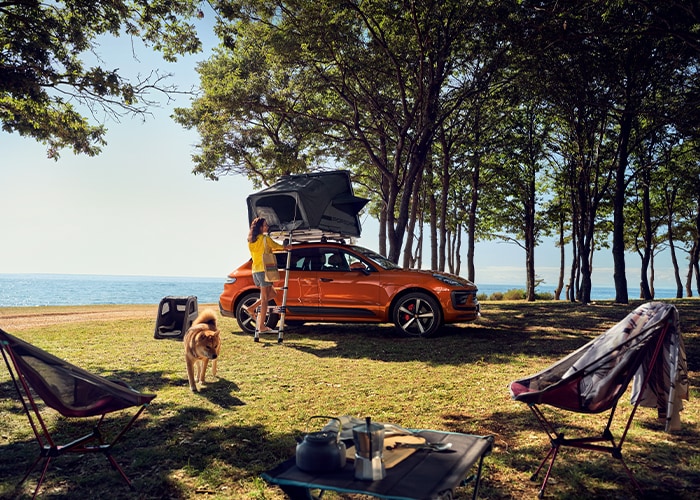
If you're looking for a tire option that you can use all year round, consider looking into all-season tires. These tires are designed to perform well on dry roads, snowy surfaces, and wet surfaces. These tires are great for larger and more active vehicles like SUVs.

We recommend that you get new tires every five years, or every time the season changes if you want tires that can handle the weather better. If one of these milestones is coming up, be sure to book an appointment with our service center.
Booking a tire change appointment with Porsche Service Center East Hanover is easy. Simply head online and fill out our service scheduling form, which will prompt you to provide information about your car, desired services, and your contact information.
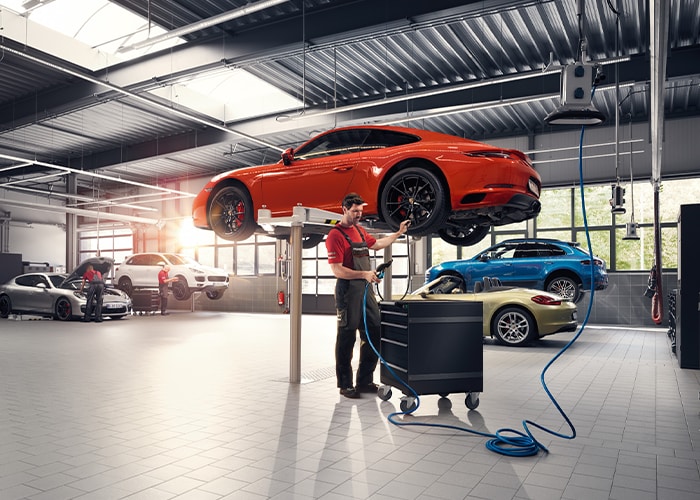
There are a couple of tell-tale signs that you might need new tires. If you notice a low tread depth, uneven wear, or visible cracks, it might be time to get them swapped out. Other indicators include reduced traction or handling and decreased fuel economy.
Porsche engineers tires alongside each vehicle platform, not after the fact. Every N-rated tire must pass road, track, and laboratory evaluations covering noise, hydroplaning, handling, and high-speed durability before receiving an N-specification marking. A tire approved at a given specification receives an N0 designation; subsequent refinements advance the number to N1, N2, and so on. That progression is not a quality ranking. A tire marked N1 is simply a later generation of the same approved design, not a better tire than an N0. Drivers comparing options at our service center should match the N-spec their vehicle was originally fitted with.
Many do. Since many Porsche models are equipped with staggered tire sizes for the front and rear axles, it's important to match the tire make, type, and N-specification across all four positions. This is particularly common on Porsche 911 variants. Because the front and rear sizes differ, those models cannot be rotated front-to-back in the traditional sense, which is worth factoring into your service plan at our East Hanover service center.
It is good practice to have your tires rotated at every oil change or brake service, or roughly every 5,000 miles, though rotation intervals vary by tire type and vehicle. For Short Hills drivers who regularly put on highway miles, checking tread depth and pressure at every service visit is a reasonable baseline. Inspection is also important during seasonal changeovers, especially when switching between summer performance tires and winter sets.
Porsche introduced TPMS on the Porsche 959 in 1986, making it the first automaker to do so. Current systems use four wheel-well antennas and a dedicated module with sensors operating at 433MHz. On most modern models, the system stores sensor IDs for both a summer and winter set, so switching between the two is straightforward. When new sensors are mounted, the onboard computer displays "TPM is learning" and requires a short drive at speeds above 15 mph to complete registration. Our technicians handle the reset and re-coding before you leave the service center.
In extreme conditions, winter tires are strongly recommended. Performance summer tires harden in winter conditions, reducing contact patch effectiveness and increasing stopping distances. Drivers in the Livingston area experience freezing conditions from December through February, making this a practical concern rather than a precaution. Porsche offers N-rated winter tires from Continental and Pirelli, developed specifically for cold-weather grip. Plan to replace them every four to six seasons regardless of tread depth, as the rubber compound degrades over time. Storing them on dedicated wheels in a cool, dry location helps maximize their service life.
If the puncture is found within the treads and is smaller than a quarter inch in diameter, it may be repairable. Damage to the sidewall or shoulder requires a full replacement for safety reasons. It is always best to have a Porsche-certified technician assess the damage rather than relying on a general tire shop that may not be familiar with the specific construction of N-rated tires. Madison drivers who experience a road hazard on Route 124 or I-287 can bring the vehicle directly to our service center for an honest assessment.
All-season tires can be used on some Porsche models, but they represent a compromise. They don't match the wet-weather performance of a dedicated summer tire or the cold-weather grip of a dedicated winter tire around Chatham. Whether they're the right choice depends on the model, how the car is driven, and how much performance capability the owner is willing to trade for year-round convenience.
Road-force balancing is essential for high-speed stability and smoothness, eliminating vibrations that can persist even after a standard balance. Standard spin balancing corrects static weight imbalance, but road-force balancing also accounts for tire and wheel uniformity under load, which is a meaningful distinction for vehicles operating at the speeds Porsche models are designed for. Every tire mounting at our service center includes road-force balancing.
Tires do not reach full traction until they have traveled 60 to 100 miles, and during that period, it is recommended to drive at moderate speeds. New tires have a release compound on the surface from the manufacturing process that takes some mileage to wear off. This is not a defect; it is a normal characteristic of any new tire, including N-rated Porsche-approved ones. Drivers picking up a vehicle after a tire replacement should plan their first drive accordingly, particularly in wet conditions.
A touchless tire-mounting machine prevents damage to delicate wheel lips, particularly on Porsche's forged and cast alloy wheels, which can be easily scored by conventional mounting equipment. This is standard practice for tire service at our center.
Uneven tread wear across a tire's width is one of the clearest indicators that the alignment is off. Feathering along the tread edges points toe issues, while excessive wear one shoulder typically indicates a camber problem. Alignment cannot reverse wear that has already occurred, but correcting it stops the pattern from progressing. For Porsche drivers near Summit who notice their vehicle pulling to one side or if the steering wheel is off-center, it's important to have the alignment checked as soon as possible.
The specifics of N-rated fitment, staggered sizing, road-force balancing, and TPMS programming require familiarity with Porsche's engineering requirements that most general tire shops don't have. Having your tires serviced by one of our factory-trained technicians means using the latest equipment and approved tire inventory, ensuring your vehicle goes home in the same calibrated state for which it was designed.
* Indicates a required field
341 Route 10
East Hanover, NJ 07936